

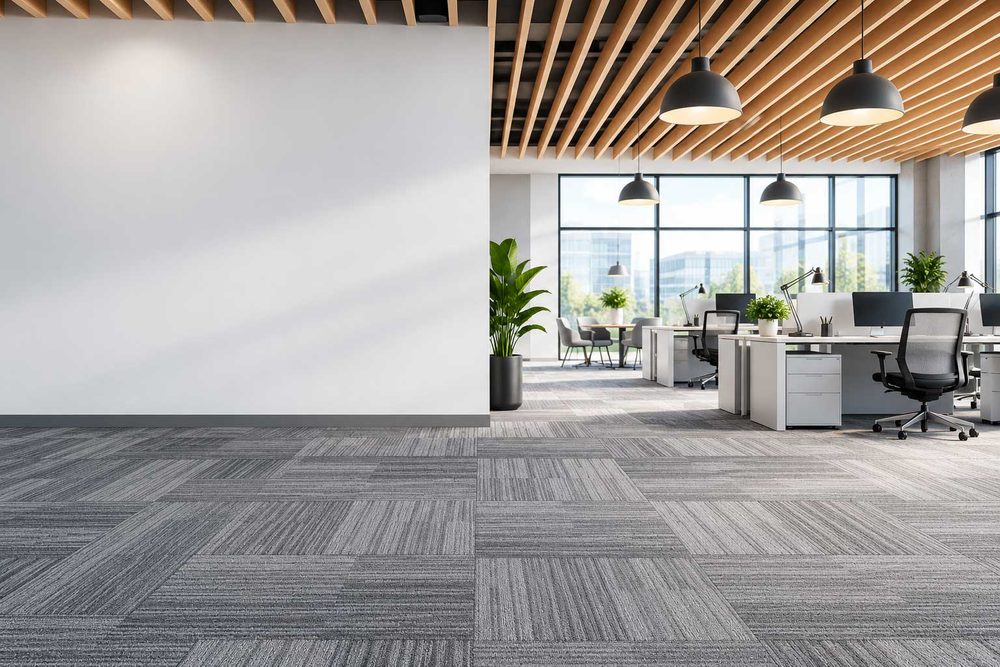
Office design has evolved considerably as businesses recognize the importance of creating comfortable and practical working environments. While furniture, technology, and lighting receive considerable attention, flooring is also an important part of workplace design. It influences the appearance of the office, the movement of employees, and the overall atmosphere experienced by staff members and visitors.
Create a Professional and Organized Environment
The appearance of an office can influence how clients perceive a business. A clean reception area, organized furniture, appropriate lighting, and consistent flooring can contribute to a professional impression.
Flooring should complement the office's furniture and overall design. Neutral colors are often suitable for professional environments because they provide a simple foundation for desks, chairs, decorative elements, and branding.
Carpet can be an appealing option in reception areas, meeting rooms, and private offices where comfort and noise reduction are important considerations.
Consider Noise Management
Noise can affect concentration, particularly in offices where employees share workspaces or regularly communicate with colleagues. Hard flooring may reflect sound, creating a noisier environment in some settings.
Carpet can absorb some sound and help reduce the impact of footsteps. This may be useful in meeting rooms, administrative offices, and areas where employees need to concentrate.
A suitable Dubai carpet can provide a combination of comfort and visual appeal while supporting the office's interior design. Businesses should consider products designed for commercial environments when flooring is expected to experience substantial daily traffic.
Choose Flooring According to Workplace Activity
Different office areas have different flooring requirements. Reception areas may need materials that maintain their appearance despite frequent movement. Meeting rooms may prioritize comfort and sound management, while corridors may require flooring that can withstand repeated use.
Carpet tiles can be an option for some commercial spaces because individual tiles may be replaced if damaged, depending on the product and installation system.
Businesses should also consider cleaning requirements, maintenance schedules, installation costs, and expected durability before making a purchase.
Plan Installation Around Business Operations
Flooring installation may affect office operations. Depending on the project size, furniture may need to be moved, workspaces temporarily relocated, or installation scheduled during weekends or quieter periods.
Planning ahead can help reduce disruption and ensure employees can return to their normal working environment as quickly as possible.
Explore Flooring Options Before Making a Decision
Businesses searching for carpet flooring near me can compare materials, styles, and installation arrangements according to their workplace requirements.
The selection process should involve more than choosing an attractive color. Carpet construction, durability, cleaning methods, and the expected level of traffic all deserve consideration.
Invest in a Practical Workplace Interior
A well-designed office should support both business operations and employee comfort. Flooring can contribute to a more organized appearance, improve the atmosphere, and complement the furniture and other interior elements.
By evaluating the needs of different office areas and selecting suitable materials, businesses can create a workspace that is professional, comfortable, and practical for everyday use.
